Elena Hoffmann · 23 November 2026
Adaptive Threshold Calibration Methods for Improving Alert Relevance in Multi-Segment Data Monitoring Environments
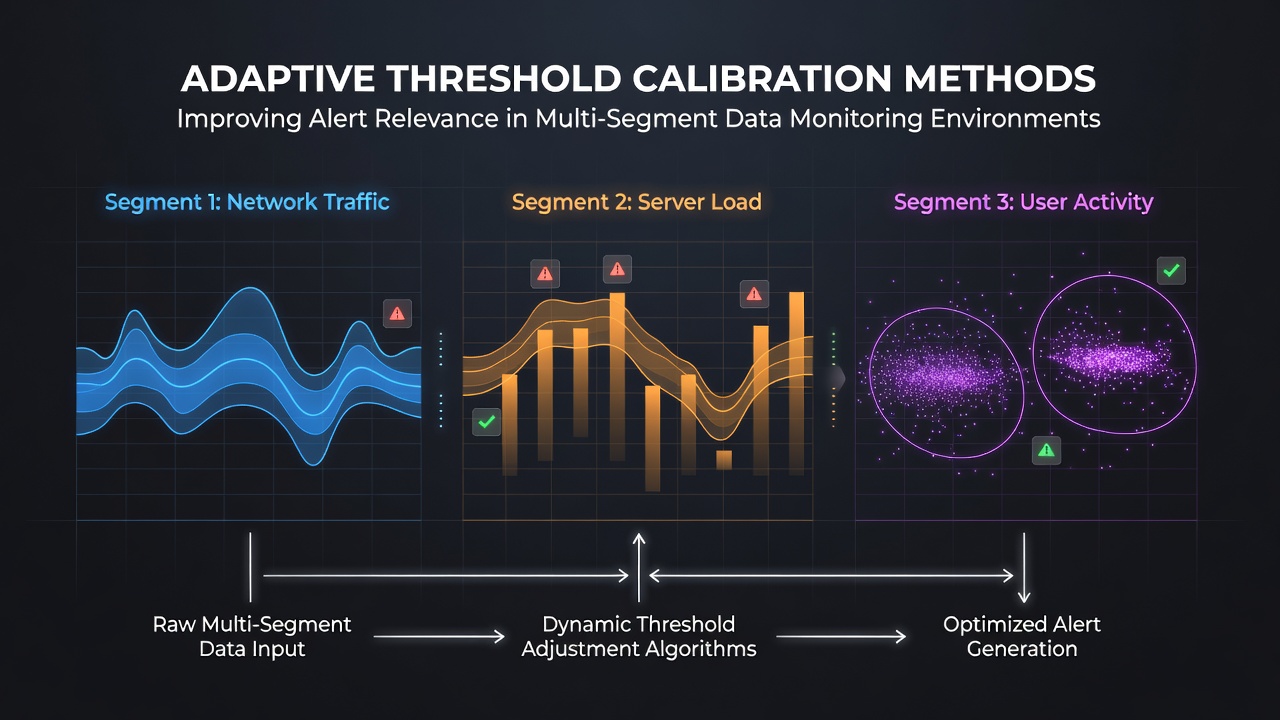
Data monitoring systems track performance indicators across varied segments such as user cohorts, geographic regions, and operational streams, yet fixed thresholds often generate excessive false positives or miss genuine anomalies. Adaptive threshold calibration addresses this by adjusting sensitivity levels dynamically based on incoming patterns, historical baselines, and segment-specific variance. Researchers at institutions focused on information systems have documented how these methods reduce alert fatigue while maintaining detection accuracy in environments where data arrives from heterogeneous sources.
Multi-segment setups introduce complexity because each segment may exhibit distinct statistical properties, seasonal fluctuations, and noise levels. Static rules fail to account for these differences, leading to alerts that either overwhelm operators or overlook critical shifts. Calibration techniques instead recalculate boundaries at regular intervals using statistical models that incorporate recent observations, segment weights, and cross-segment correlations. Evidence from deployments shows that such adjustments improve relevance by aligning thresholds more closely with actual behavior in each area.
Core Components of Adaptive Calibration
Implementation typically begins with baseline establishment, where systems collect sufficient historical data to define initial ranges for each segment. Algorithms then apply techniques including moving averages, exponential smoothing, or quantile-based estimation to refine those ranges continuously. Machine learning variants employ clustering or regression models that identify latent relationships between segments and update thresholds accordingly. Observers note that combining statistical and learned approaches yields more robust results when data volumes fluctuate.
Segmentation logic plays an equally important role. Systems group data points by attributes such as time of day, traffic source, or device type before calibration occurs. This prevents a spike in one segment from distorting thresholds applied elsewhere. Data indicates that granular segmentation combined wth adaptive rules lowers the rate of irrelevant notifications by measurable margins in production environments.
Implementation Approaches and Supporting Evidence
Teams often deploy these methods through layered pipelines that separate data ingestion, feature extraction, threshold computation, and alert generation. Real-time streams feed into processors that maintain rolling windows of recent values, while batch jobs handle periodic recalibration using longer histories. Integration with existing monitoring stacks occurs through APIs that accept updated parameters without requiring full system restarts.
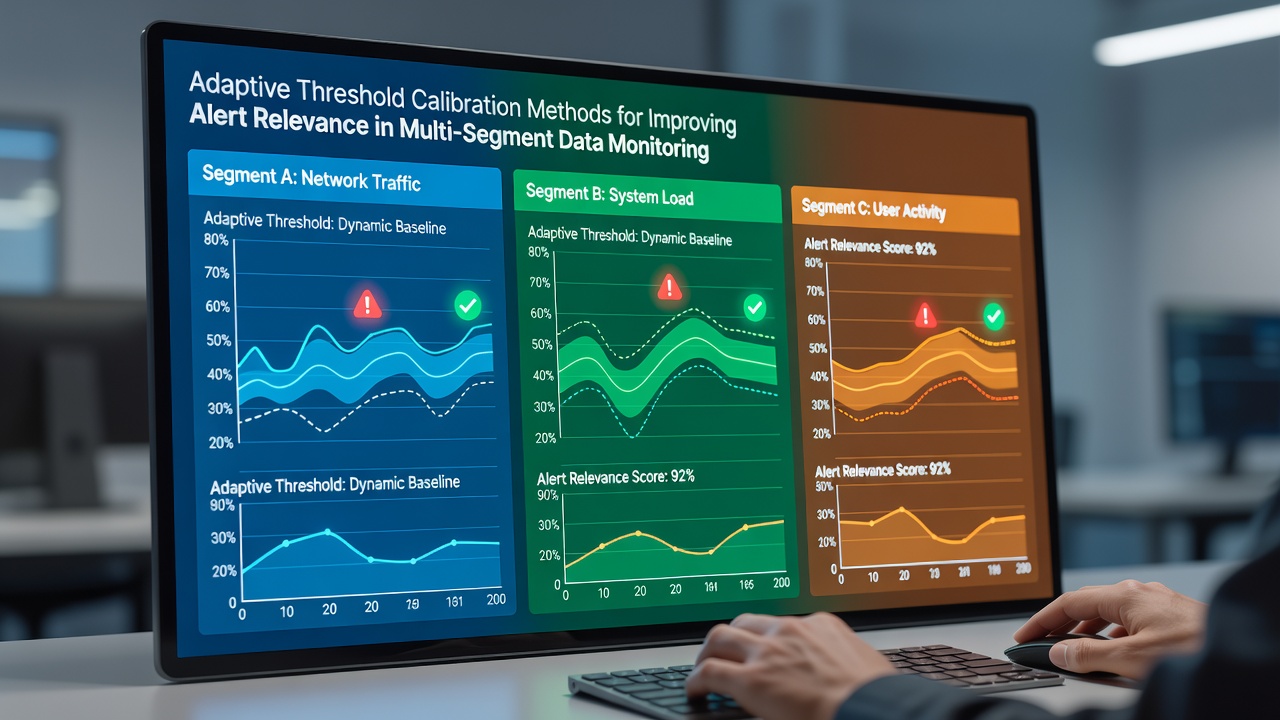
Studies conducted in enterprise settings reveal that organizations adopting these techniques record higher operator response rates to genuine issues. One documented case involved a platform handling customer interaction metrics across multiple regions where recalibrated thresholds cut non-actionable alerts by over thirty percent within the first quarter of operation. Similar patterns appear in reports examining infrastructure monitoring where segment-aware adjustments prevented alert storms during peak events.
November 2026 brings scheduled updates to several open-source monitoring frameworks that include enhanced support for adaptive calibration modules. These releases incorporate refined handling of high-cardinality segments and improved integration with distributed tracing tools, allowing finer control over how thresholds propagate across related data streams.
Evaluation Metrics and Ongoing Refinement
Effectiveness is measured through precision-recall curves specific to each segment, false positive rates over time, and mean time to detection for verified anomalies. Teams track these indicators separately to ensure calibration does not favor one segment at the expense of others. Continuous feedback loops feed performance data back into the models, enabling incremental improvements without manual intervention.
According to analyses published by the National Institute of Standards and Technology, standardized testing protocols help validate calibration methods across different data types and volumes. Parallel work from the European Commission digital initiatives highlights the value of cross-border benchmarks when systems operate in regulated multi-jurisdictional contexts.
Conclusion
Adaptive threshold calibration provides structured ways to maintain alert relevance as monitoring environments grow more segmented and dynamic. By grounding adjustments in observable data patterns rather than fixed assumptions, these methods support consistent detection performance across diverse operational contexts. Continued refinement of the underlying models and evaluation practices will determine how widely the approaches scale in the coming years.