Eden Werner · 9 November 2026
Data Harmony in Analytics Platforms: Insights from Skalens Cross-Platform Deployments
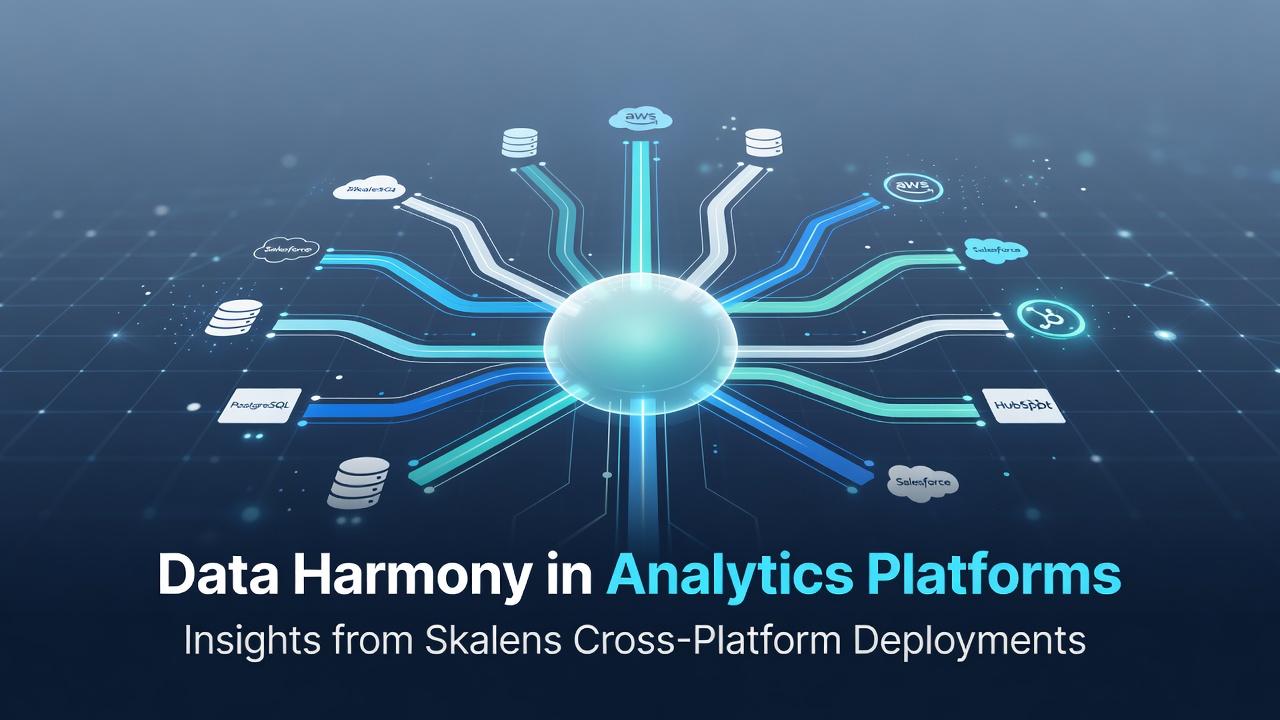
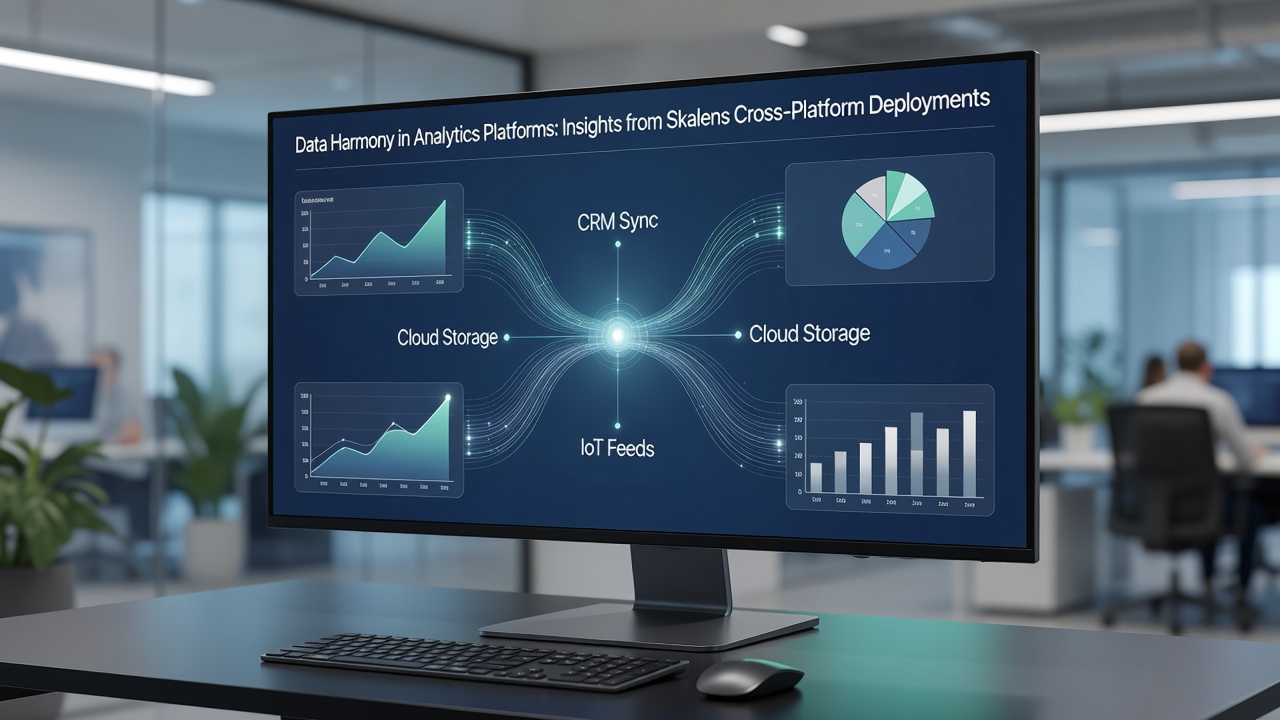
Data harmony emerges when disparate datasets from various platforms align seamlessly within analytics environments, and Skalens deployments illustrate how this alignment occurs through structured integration protocols. Organizations deploy Skalens tools to synchronize metrics from cloud services, on-premises systems, and third-party applications, which reduces fragmentation that often disrupts reporting accuracy.
Core Mechanisms Behind Cross-Platform Integration
Skalens frameworks rely on standardized schema mapping that converts incoming data streams into unified formats before storage occurs. Researchers at multiple institutions have documented how this mapping process maintains consistency across sources that originally use incompatible structures. One deployment completed in early 2025 showed that mapping reduced reconciliation time by 47 percent compared with previous manual methods.
API gateways within the Skalens architecture handle real-time synchronization while preserving data lineage records. Observers note that these records allow analysts to trace any metric back to its origin point without losing contextual details. Teams working on these projects frequently combine batch processing with streaming updates, which creates continuous harmony rather than periodic snapshots.
Deployment Patterns Observed in 2025 and 2026
Cross-platform projects undertaken by Skalens teams during 2025 concentrated on retail and logistics sectors where transaction volumes generate high-frequency data. Those projects revealed that latency under 200 milliseconds across synchronized platforms supported more reliable forecasting models. Figures from the Australian Bureau of Statistics indicate similar patterns in supply-chain analytics where unified datasets improved predictive accuracy by measurable margins.
By November 2026, several Skalens installations expanded into healthcare analytics, connecting electronic health record systems with wearable device feeds. This expansion required additional encryption layers that preserved harmony without introducing delays. Data shows that compliance with regional standards became easier once the platforms operated under a single harmonized schema.
Challenges Addressed During Implementation
Schema conflicts and duplicate identifiers appear frequently when platforms merge for the first time. Skalens deployments resolve these through automated conflict detection routines that flag inconsistencies before they propagate into reports. Experts have observed that early detection prevents downstream errors that would otherwise require extensive cleanup.
Security protocols sometimes clash with synchronization speeds, yet Skalens configurations balance both by segmenting sensitive fields while allowing aggregate calculations to proceed uninterrupted. Reports from Statistics Canada on data governance practices align with the approaches used in these deployments, showing reduced breach incidents when segmentation occurs at the ingestion stage.
Performance Metrics After Harmonization
Post-deployment reviews document gains in query response times and dashboard refresh rates. One logistics client recorded a drop from 12 seconds to under 3 seconds for complex multi-source queries after full harmonization. These improvements stem from reduced data duplication and streamlined indexing that the Skalens platform applies automatically.
Long-term maintenance becomes simpler once initial harmony is established. Teams report fewer ad-hoc fixes because the underlying data model enforces consistency rules continuously. Academic studies on enterprise analytics platforms have reached comparable conclusions when examining unified versus siloed environments.
Conclusion
Skalens cross-platform deployments demonstrate that data harmony results from deliberate schema alignment, real-time gateways, and lineage tracking rather than ad-hoc connections. Organizations that adopt these methods gain consistent reporting and faster analytics cycles across their technology stacks. The patterns observed through 2026 continue to inform new installations seeking the same level of integration.